 By Saurav
 India’s automotive sector is one of the largest in the world — with passenger vehicle sales consistently exceeding 4 million units annually, two-wheeler sales approaching 20 million units per year, and a total registered vehicle population exceeding 340 million across all categories. Every one of these vehicles requires periodic cleaning and maintenance — creating a vast, geographically distributed, and perpetually recurring demand for car wash services across India’s cities, towns, and highways. Whether a car wash business is profitable in India in 2026 depends on location selection, service format, pricing strategy, and the operational execution quality that determines customer retention in a business where repeat visits are the primary revenue engine. The honest assessment is that car wash businesses can be highly profitable when executed with appropriate capital allocation, right location selection, and service quality consistency — but fail frequently when undercapitalised or poorly located.
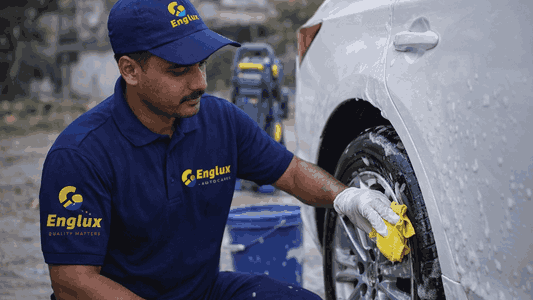
The Car Wash Market Opportunity
India’s car wash market is at an interesting inflection point — transitioning from a largely unorganised sector dominated by roadside manual washers charging ₹50-150 per wash toward a structured services industry with automated machines, premium detailing studios, and subscription-based membership models that generate predictable recurring revenue. This transition is driven by vehicle owners’ growing awareness of proper vehicle care, the rising value of vehicle investments motivating better maintenance, and the operational limitations of unorganised roadside services including inconsistent quality, water wastage concerns, and lack of interior cleaning capabilities.
Urban vehicle owners increasingly seek services beyond basic exterior washing — interior vacuuming and cleaning, dashboard and leather conditioning, engine bay cleaning, paint protection film application, ceramic coating, and periodic detailing — creating a service menu with meaningfully higher ticket sizes than basic washing alone.
Car Wash Business Key Financial Parameters
| Parameter | Basic Manual Wash | Semi-Automated | Automated Tunnel | Premium Detailing Studio |
| Capital investment | ₹2 lakh–8 lakh | ₹8 lakh–25 lakh | ₹25 lakh–80 lakh | ₹10 lakh–40 lakh |
| Space requirement | 800–1,500 sq ft | 1,500–3,000 sq ft | 3,000–6,000 sq ft | 1,000–2,500 sq ft |
| Basic wash price | ₹150–300 | ₹200–400 | ₹300–500 | ₹500–1,500 |
| Full interior + exterior | ₹500–800 | ₹600–1,200 | ₹700–1,500 | ₹2,000–5,000 |
| Ceramic coating price | Not typically offered | ₹8,000–20,000 | ₹8,000–20,000 | ₹15,000–60,000 |
| Daily vehicle capacity | 20–40 | 40–80 | 80–200 | 5–15 |
| Monthly revenue potential | ₹1.5 lakh–4 lakh | ₹3 lakh–10 lakh | ₹8 lakh–25 lakh | ₹3 lakh–15 lakh |
| Water consumption per wash | 60–80 litres | 40–60 litres | 15–25 litres | 30–50 litres |
| Staff requirement | 3–6 | 4–8 | 5–10 | 4–10 skilled |
| Net profit margin | 25–40% | 30–45% | 30–42% | 35–55% |
| Break-even period | 6–18 months | 12–24 months | 18–36 months | 8–18 months |
Profitability Drivers and Competitive Advantages
Subscription and Membership Models: The most financially transformative innovation in India’s car wash industry is the membership model — offering customers unlimited or fixed-frequency washing for monthly subscription fees ranging from ₹500 to ₹2,500 per month depending on vehicle type and service level. A car wash operation with 200 active monthly members generating average ₹800 per month earns ₹1.6 lakh in guaranteed recurring revenue before any walk-in customer contributes a single rupee. This recurring revenue foundation dramatically improves cash flow predictability and business valuation compared to purely transactional wash-by-wash revenue.
High-Value Detailing and Protection Services: Premium services — ceramic coating, paint protection film application, interior deep cleaning, headlight restoration, and dent removal — command prices ranging from ₹8,000 to ₹1.5 lakh per vehicle with material and labour cost structures that generate margins of 50-70%. A single ceramic coating job generating ₹25,000 revenue produces equivalent profit to approximately 80-100 standard exterior washes — making high-value detailing the margin-maximising service line that transforms car wash operations from low-margin volume businesses into genuinely profitable ventures.
Corporate Fleet Contracts: Companies managing large vehicle fleets — logistics operators, cab aggregators, employee transport companies, dealerships — require regular fleet cleaning services on contracted terms. These B2B contracts provide volume revenue with predictable scheduling that maximises equipment and staff utilisation while reducing marketing costs per wash unit. A single contract for 50 vehicles washed twice weekly at ₹250 per wash generates ₹10 lakh annually from a single client relationship.
Water Recycling Competitive Advantage: Water scarcity and municipal water cost escalation in Indian cities are creating meaningful operational cost differentiation between car wash operations with recycling systems and those without. Automated tunnel washes with water recycling systems using 15-25 litres per wash versus 60-80 litres for manual washes generate significant cost savings at volume while also providing environmental compliance credentials that increasingly matter to premium customers and commercial clients with ESG commitments.
Location Strategy — The Dominant Success Variable
Car wash profitability is more dependent on location than almost any other single variable — making site selection the most consequential business decision. Locations near residential apartment complexes with high vehicle density, on the access roads to premium office parks, near vehicle dealerships, and alongside highway fuel stations generate consistent high-traffic opportunity that sustains the wash volumes required for profitability. Locations with limited vehicle parking turnover, poor visibility from main roads, or inadequate water supply infrastructure consistently underperform regardless of service quality.
Challenges Requiring Management Attention
Water Supply and Municipal Compliance: Water availability and municipal compliance represent the most operationally sensitive challenges. Many Indian cities have restrictions on commercial water usage that require borewell licensing, water tanker supply arrangements, or water recycling system investment to maintain adequate supply for continuous operations. Non-compliance with water usage regulations creates closure risk that can destroy the capital invested.
Staff Training and Quality Consistency: Manual car washing quality depends entirely on staff skill, attention, and motivation — creating the perpetual challenge of training new staff to consistent standards, managing quality when experienced staff leave, and maintaining service quality during peak demand periods when shortcuts are tempting. Customer complaints about scratched paint, missed interior areas, or damaged accessories create reputation damage disproportionate to the individual service value — making quality management a continuous operational priority.
Car Wash vs Alternative Automotive Service Businesses
| Parameter | Car Wash | Car Service Centre | Tyre Shop | Car Detailing Studio |
| Capital requirement | Low to moderate | High | Moderate | Moderate |
| Repeat visit frequency | Weekly to monthly | Quarterly to annually | As needed | Annually to bi-annually |
| Technical skill requirement | Low to moderate | Very high | Moderate | Moderate to high |
| Membership model viability | Excellent | Limited | Not applicable | Limited |
| Revenue per transaction | Low to moderate | High | Moderate | Very high |
| Space requirement | Moderate | Large | Moderate | Moderate |
| Regulatory complexity | Water usage — moderate | Pollution norms — high | Moderate | Low |
Car wash businesses are genuinely profitable in India for operators who select high-vehicle-density locations with adequate water access, implement subscription models for recurring revenue predictability, develop high-value detailing services for margin enhancement, and manage water usage efficiently through recycling systems. The business rewards location intelligence and service quality consistency more than capital investment scale.