 By Saurav
 India’s mobility landscape is transforming at an unprecedented pace — rising middle-class incomes, growing business travel, booming domestic tourism, and the surge of app-based cab aggregation have collectively created a transportation services market of extraordinary scale and diversity. Car rental specifically — the service of providing vehicles with or without drivers for defined time periods to individual, corporate, and institutional clients — occupies a distinct position in this landscape, serving needs that app-based taxis, auto-rickshaws, and public transport cannot adequately address. Whether a car rental business is profitable in India in 2026 requires distinguishing between different rental models, understanding the capital intensity involved, and honestly evaluating both the genuine opportunities and the serious competitive and operational challenges that the business presents.
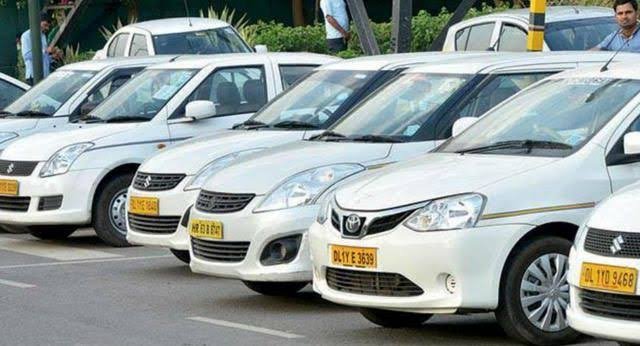
The Car Rental Market Segments in India
India’s car rental market spans several distinct segments with different economics, competition dynamics, and profitability profiles. Self-drive car rental — pioneered in India by Zoomcar and followed by numerous competitors — allows customers to rent vehicles without drivers through app-based booking for personal use over hours or days. Chauffeur-driven rental serves both individual leisure travellers and corporate clients requiring executive transportation with professional drivers. Airport transfer services represent a specific high-demand application of chauffeur-driven rental with predictable booking patterns and premium pricing. Employee transportation for corporate clients — typically contracted monthly for regular office commute services — provides the most stable recurring revenue in the sector. Wedding and event car rental addresses the celebration market’s desire for premium vehicle experiences.
Car Rental Business Key Financial Parameters
| Parameter | Small Fleet (5–10 Cars) | Medium Fleet (20–50 Cars) | Large Fleet (100+ Cars) |
| Capital investment per vehicle | ₹8 lakh–25 lakh depending on segment | ₹6 lakh–20 lakh — bulk purchase discount | ₹5 lakh–15 lakh — fleet pricing |
| Total capital requirement | ₹40 lakh–2.5 crore | ₹1.2 crore–10 crore | ₹5 crore–15 crore+ |
| Daily rental rate — economy car | ₹1,500–3,000 with driver | ₹1,500–3,000 | ₹1,200–2,500 — volume contracts |
| Daily rental rate — premium car | ₹4,000–12,000 with driver | ₹4,000–10,000 | ₹3,500–8,000 |
| Fleet utilisation target | 60–70% for break-even | 65–75% for profitability | 70–80% for strong profitability |
| Driver salary per month | ₹12,000–20,000 | ₹11,000–18,000 | ₹10,000–16,000 |
| Vehicle maintenance cost | ₹3,000–8,000 per vehicle monthly | ₹2,500–7,000 | ₹2,000–6,000 — scale economics |
| Insurance cost per vehicle annually | ₹25,000–80,000 | ₹22,000–70,000 | ₹18,000–60,000 |
| EMI per vehicle monthly | ₹15,000–45,000 | ₹13,000–40,000 | ₹12,000–35,000 |
| Net profit margin — good utilisation | 18–28% | 20–32% | 22–35% |
| Break-even period | 3–5 years | 3–4 years | 2–4 years |
Revenue Opportunities and Profitability Drivers
Corporate Contract Stability: Corporate employee transportation contracts provide the most stable revenue foundation available in car rental — monthly fixed-fee arrangements with companies for regular office transportation that generate predictable cash flows regardless of individual booking fluctuations. Once established, corporate contracts typically renew annually with minimal churn — creating an annuity-like revenue stream that covers fixed costs and enables confident fleet expansion planning. Large IT parks, corporate campuses, and business districts generate enormous employee transportation demand that organised car rental operators with documented safety records, GPS-tracked fleets, and professional management are well-positioned to capture.
Airport Transfer Premium: Airport transfers command premium pricing relative to comparable distance city rides — travellers are time-sensitive, prefer reliability over price optimisation, and regularly book in advance through hotel concierges, corporate travel desks, and direct operator relationships that provide revenue with booking certainty. Establishing relationships with hotels, travel agents, and corporate travel management companies in airport-adjacent cities creates consistent advance booking pipelines that improve fleet utilisation predictably.
Wedding and Event Premium Segment: Premium vehicle rental for weddings — providing luxury sedans, SUVs, and specialty vehicles for baraat processions, airport pickups, and venue transportation — generates the highest daily rates in the car rental business. Daily rental rates for luxury vehicles during peak wedding season can reach ₹15,000-50,000 per vehicle — producing margins that offset lower-utilisation periods and justify maintaining premium vehicles in the fleet for this application.
Operational Challenges and Risk Factors
High Capital Intensity: Car rental’s most significant business challenge is its capital intensity — vehicles represent large depreciating assets that require continuous replacement as they age and accumulate mileage. Vehicle depreciation of ₹3,000-8,000 per month per vehicle represents a substantial cost that must be recovered through rental pricing before any profit is realised. EMI obligations on financed vehicles create fixed costs that continue regardless of fleet utilisation — making cash flow management during low-utilisation periods the operational challenge that has caused numerous small operators to exit the business.
Driver Management Complexity: Chauffeur-driven rental businesses depend entirely on driver quality, reliability, and professional conduct — the primary interface between the business and its customers. Driver recruitment, training, background verification, behaviour monitoring, and retention represent ongoing management challenges that scale proportionally with fleet size. Driver attrition — when trained drivers leave to join Ola, Uber, or competitors — creates recruitment and training costs that erode margins significantly.
Vehicle Maintenance and Breakdown Risk: Fleet vehicles operate under intensive utilisation conditions that accelerate mechanical wear relative to personal vehicle usage. Maintaining relationships with reliable service centres, keeping spare parts inventory for commonly needed repairs, and managing breakdown recovery for stranded customers requires operational infrastructure that adds cost and management complexity to the business model.
Car Rental vs Alternative Transport Business Options
| Parameter | Car Rental | Cab Aggregator Partnership | Bus / Tempo Traveller | Bike Rental |
| Capital per unit | High — ₹8 lakh–25 lakh | Moderate — personal vehicle | Very high — ₹15 lakh–40 lakh | Low — ₹60,000–2 lakh |
| Revenue per day | ₹2,000–12,000 | ₹1,500–4,000 net | ₹5,000–25,000 | ₹500–2,000 |
| Corporate contract potential | Very high | Low | High — employee transport | Low |
| Driver requirement | Yes — training needed | Self-driven | Yes | No — self-drive |
| Utilisation sensitivity | High — break-even dependent | Flexible | High | Moderate |
| Scalability | High with capital | Individual limit | Moderate | High |
| Competitive intensity | Moderate | Very high — aggregator platform | Moderate | Growing |
Car rental is a profitable business in India for operators who secure corporate transportation contracts for revenue stability, maintain fleet utilisation above 65-70% consistently, manage driver hiring and retention professionally, and calibrate fleet size to actual contracted demand rather than aspirational capacity. The business rewards operational discipline, customer relationship investment, and conservative financial management over aggressive fleet expansion without secured revenue backing.