 By Saurav
Is a handicraft business legal from home in India? Yes — and unlike most businesses covered in this series, this is genuinely one of the more government-encouraged categories rather than one primarily defined by compliance burden. No mandatory license is required to make and sell handicrafts from your home. What exists instead is a rich, largely optional ecosystem of registrations, schemes, and certifications specifically designed to help artisans access credit, exhibitions, and export markets — support most craftspeople genuinely benefit from tapping into, even though nothing forces them to.
This distinction matters because a lot of home-based artisans assume, incorrectly, that formal registration is either unnecessary bureaucracy or an obstacle to simply selling what they make. In reality, the Development Commissioner (Handicrafts), the nodal Government of India agency under the Ministry of Textiles, exists specifically to support craft and artisan-based activities through technical and financial assistance — and connecting with this system, even informally, opens doors that operating purely off-grid never will.
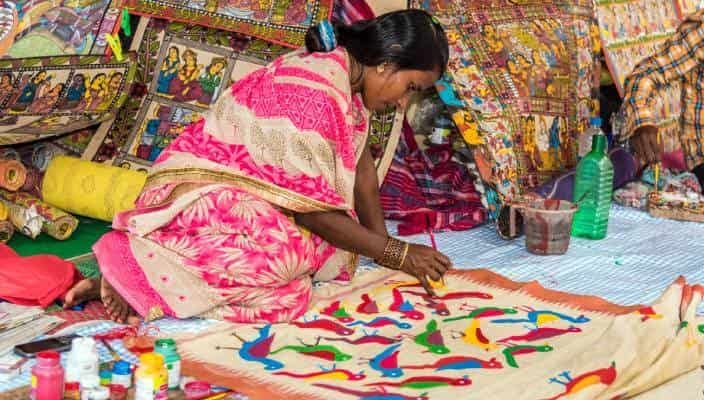
No Mandatory License Needed — But a Real Support Ecosystem Exists
Let’s be clear on the baseline first: crafting and selling handicrafts from home doesn’t require any specific government permission. You can start today with just standard business fundamentals — a proprietorship, basic GST compliance once you cross the threshold, and nothing else formally mandated.
That said, the Artisan Card, registered through the “Pehchan” portal under the Development Commissioner (Handicrafts), functions as a genuinely useful multipurpose credential:
- It’s used to access credit facilities from banks specifically designed around artisan needs
- It enables participation in exhibitions and export opportunities that would otherwise be harder to access independently
- It qualifies holders for State and National Award competitions recognising craft excellence
- It supports applications for export or import licences if your craft business grows into international trade
None of this is mandatory to simply sell handicrafts, but for anyone genuinely building a serious home-based craft business, registering as an artisan is the practical first step toward everything else this ecosystem offers.
PM Vishwakarma: Where Most Home-Based Artisans Should Start
This scheme deserves specific attention because it’s genuinely accessible and directly relevant to home craft businesses. Registering under PM Vishwakarma provides free tools, formal skill certification, and an initial loan tranche of ₹1 lakh at a concessional 5% interest rate — a genuinely favourable starting point for artisans needing working capital without the burden of high-interest informal lending.
This scheme is explicitly designed to stack with other artisan support programmes, meaning registering here isn’t a one-time benefit but a foundation you build subsequent access on top of.
Selling to Government Buyers: GeM Registration
This is a genuinely valuable, often-overlooked channel for home-based artisans. By registering on the Government e-Marketplace (GeM) using Udyam and PM Vishwakarma credentials together, artisans can supply directly to government offices — bypassing the middlemen who traditionally captured a significant share of craft margins.
- This channel covers items ranging from handloom fabrics and office linens to handcrafted brass or wooden presentation items for institutional use
- Registered artisans benefit from EMD (Earnest Money Deposit) exemptions, removing a common financial barrier to bidding on government procurement
- Access to the mandatory 25% MSME purchase quota gives registered small artisan businesses a genuine, protected share of government buying that larger suppliers can’t fully crowd out
For a home-based craft business looking to scale beyond local or informal sales, this government procurement channel is worth taking seriously precisely because it’s structured to favour small registered producers.
If Your Craft Carries a Geographical Indication Tag: Registration Genuinely Matters
This is the one area where registration shifts from optional-but-beneficial to genuinely important, and it’s worth understanding clearly if your craft is tied to a specific regional tradition. Certain Indian handicrafts — Kashmir’s Pashmina shawls, Kani shawls, and hand-knotted carpets are well-known examples — carry Geographical Indication (GI) protection, certifying that the product possesses specific qualities or reputation tied to its geographical origin.
- Registration with the relevant state handicrafts directorate — in Kashmir’s case, the Directorate of Handicrafts & Handloom — is essential specifically for legitimately manufacturing, selling, or exporting products under a GI-protected regional name
- This registration authorises you to sell genuinely GI-tagged products, which builds real trust with high-end buyers and collectors who specifically seek authenticated regional craft
- Major e-commerce platforms increasingly require this registration to list products under protected regional category tags, meaning an unregistered artisan working in a GI-protected craft tradition may find themselves genuinely locked out of certain marketplace categories
- Operating as a lawful dealer of protected regional handicrafts under relevant trade regulations depends directly on holding this registration
If your home-based craft business specifically produces work tied to a protected regional tradition, this is genuinely worth pursuing — both for the legal legitimacy it provides and for the market access it unlocks that unregistered producers of the same craft simply don’t have.
Craftmark: Voluntary Quality Certification Worth Considering
The Craftmark Quality Mark certification exists specifically to confirm authentic handwork, distinguishing genuine artisan-made pieces from mass-manufactured imitations marketed as handmade. This is entirely voluntary, but for a home-based artisan trying to compete against factory-produced items falsely marketed with handmade appeal, this certification offers a genuine, credible way to signal authenticity to increasingly discerning buyers.
Standard Business Basics Still Apply
Beyond the handicraft-specific ecosystem above, the underlying business follows the same light standard covered for other home-based businesses in this series:
- Udyam registration, free and worth pursuing given how directly it interlocks with PM Vishwakarma and GeM access specifically for artisans
- GST registration, mandatory once turnover crosses the applicable threshold, or immediately if selling through an e-commerce platform
- Genuine low-impact zoning treatment, since home-based craft production typically involves minimal customer foot traffic and no significant commercial disruption to a residential setting, following the same pattern covered for other quiet home businesses
What Happens If You Skip GI Registration for a Protected Craft Specifically
This is the one area in this article where skipping registration carries real consequences, distinct from the largely optional ecosystem covered above:
- Marketing or selling items as a specific GI-protected regional craft — claiming to be genuine Kashmir Pashmina, for instance — without proper registration and authentication risks misrepresentation exposure, since GI protection exists specifically to prevent exactly this kind of imitation
- Unregistered producers of GI-protected crafts may find themselves excluded from e-commerce categories and buyer trust specifically reserved for authenticated, registered artisans
- Beyond formal registration issues, the broader craft community and consumer trust in genuine regional handicrafts depends on this system functioning properly — operating outside it, even unintentionally, undermines the protection the GI tag was designed to provide for legitimate regional artisans
FAQs
Q1. I make simple handmade jewellery from home and sell occasionally to friends — do I need any handicraft-specific registration?
No, this level of informal activity doesn’t require any specific registration. Consider Artisan Card registration and PM Vishwakarma only once you’re genuinely building this into a scaling business seeking credit, exhibition access, or export opportunities.
Q2. My craft isn’t tied to any specific regional GI tag — should I still bother with GI-related registration?
No, GI registration specifically applies to crafts carrying recognised geographical indication protection. If your work doesn’t fall into a GI-protected category, this particular registration simply doesn’t apply to your business.
Q3. How does PM Vishwakarma registration actually help a home-based artisan practically?
It provides free tools, formal skill certification, and an initial ₹1 lakh loan at 5% interest — genuinely useful working capital access that’s considerably more favourable than most informal lending options available to small home-based craft producers.
Q4. I want to sell my handicrafts to government offices — what’s the actual first step?
Register for Udyam and PM Vishwakarma first, since GeM registration specifically uses these credentials together to verify your eligibility for EMD exemptions and the protected MSME procurement quota when bidding on government purchases.