 By Saurav
Is a goat farming business legal in India? Yes, and compared to poultry and dairy farming covered elsewhere in this series, goat farming carries a genuinely lighter regulatory threshold at small scale — while simultaneously being one of the most actively subsidised livestock businesses the Indian government supports. Most states don’t require any specific license for farms with fewer than 50 goats, a meaningfully different starting point than poultry, where recent rule changes now bring farms above just 5,000 birds into formal environmental oversight, or dairy, where a 2026 FSSAI directive made registration mandatory for independent producers regardless of scale.
This makes goat farming an interesting outlier in this series: a business where the compliance burden genuinely stays modest until you reach real commercial scale, paired with government subsidy programmes generous enough to fund up to half your setup costs. Understanding both sides — the light regulatory bar and the genuinely valuable support available — matters for anyone considering this as a serious agribusiness.
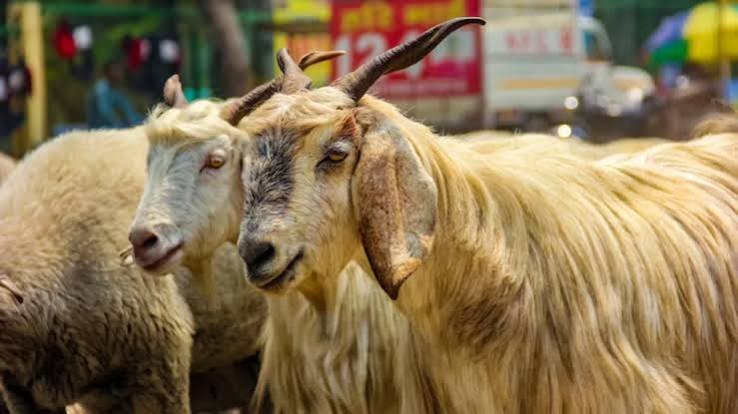
The Genuinely Low Bar for Small-Scale Goat Farming
This is worth stating clearly upfront, since it distinguishes goat farming from most other livestock businesses covered in this series. Most Indian states do not require a license for farms keeping fewer than 50 goats, treating this scale as broadly equivalent to traditional small-holder livestock keeping rather than a formally regulated commercial operation.
For a hobbyist, a small rural household supplementing income, or a genuinely small-scale entrepreneur testing the business before scaling, this means you can start goat farming without navigating the kind of layered licensing process that governs poultry or dairy operations from day one.
What Changes Once You Cross 50 Goats
Once your herd reaches or exceeds 50 goats, the regulatory picture shifts, and a few specific registrations become genuinely relevant:
- FSSAI licensing becomes necessary specifically if you’re processing meat — slaughtering, packaging, or selling goat meat products directly — rather than purely raising and selling live animals
- GST registration applies once your turnover crosses the applicable threshold, following the same standard rules covered throughout this series
- Pollution clearance from your state pollution control board becomes relevant at this scale, following a similar underlying logic to the poultry environmental guidelines covered elsewhere — waste management and land impact genuinely scale with herd size
Goat farming, like other forms of animal husbandry, is a taxable business activity — the informal, small-scale exemption applies specifically to formal licensing thresholds, not to your underlying tax obligations once you’re genuinely operating commercially.
The Subsidy Side: Why Goat Farming Is Different From Most Businesses in This Series
This is genuinely worth understanding in detail, because few businesses covered in this collection offer government support at this scale. The National Livestock Mission (NLM), operated with NABARD’s involvement, provides a capital subsidy commonly cited around 50% of project cost, subject to ceilings and approval, specifically for goat and sheep entrepreneurship units.
- Some sources describe category-based variation in subsidy percentage — 33% for those falling under the poverty line or SC/ST category, and 25% for OBC and general category applicants — while others describe a more uniform figure up to 40%. Given this genuine variation across sources, confirm the exact current percentage applicable to your specific category through the official NLM portal before finalising your project planning
- Beyond NLM specifically, the Animal Husbandry Infrastructure Development Fund (AHIDF) offers loans up to 90% of project cost, alongside a 3% interest subvention for eligible entities, and a Credit Guarantee Fund of ₹750 crore managed by NABARD covering up to 25% of credit facility specifically for MSMEs
- Many state governments layer their own livestock development schemes on top of central support, offering additional subsidies in the 10-20% range that can be clubbed with NABARD-backed schemes for combined financial benefit
For a commercial-scale goat farm — the model NABARD’s own guidance describes as raising around 100 goats, potentially generating annual profits between ₹12 lakh and ₹18 lakh — this stacked subsidy support meaningfully reduces the actual capital burden of getting started.
How to Actually Apply for These Subsidies
The application process runs primarily through NABARD-linked channels rather than a single centralised government office:
- Applications for NLM support are submitted through the official portal, with a Loan Application Form covering identity proof, land documents, and project details
- Your application undergoes review by the State Implementing Agency notified by your state government, which evaluates feasibility alongside your creditworthiness and business model
- You cannot apply to NABARD directly for a loan — NABARD functions as an operating agency supporting financial institutions in offering these subsidised loans, so applications route through nationalised banks, regional rural banks, or other participating financial institutions instead
- A well-prepared project report is essential to a successful application — covering breed selection rationale, farming system (intensive, semi-intensive, or free-range), complete cost accounting, revenue projections, and cash-flow analysis
Housing and Welfare Standards Worth Following Regardless of License Status
Even below the formal licensing threshold, following genuine welfare and infrastructure standards protects both animal health and your investment:
- Scientifically designed sheds with proper cross ventilation and adequate drainage
- Spacing of roughly 15 to 20 square feet per goat, avoiding overcrowding that spreads disease and stresses animals
- Elevated flooring to prevent water pooling, which contributes significantly to disease risk in goat housing
- Separate housing areas for different age groups, since kids, breeding stock, and mature animals have genuinely different care needs
- Consistent deworming and vaccination protocols — disease remains the single biggest threat to goat farming profitability, and neglecting this is a far more common cause of business failure than any regulatory gap
GST: When Goat Farming Becomes Genuinely Taxable
As covered above, goat farming counts as animal husbandry and is a taxable activity once your business crosses standard GST thresholds. Given how the government structures its own subsidy applications around formal project reporting and financial documentation, most commercial-scale goat farmers pursuing NABARD or NLM support will naturally cross into proper GST and tax registration territory as part of formalising their operation for subsidy eligibility anyway.
What Happens If You Skip Required Registration at Scale
Given how genuinely light the regulatory burden stays below 50 goats, the consequences here center specifically on operators who’ve scaled beyond that threshold without adjusting their compliance:
- Operating a larger commercial goat meat processing operation without proper FSSAI licensing exposes the business to standard food safety penalties covered elsewhere for meat and dairy businesses
- Missing GST registration once your turnover crosses the applicable threshold carries standard tax non-compliance consequences
- Operating at larger scale without pollution clearance where genuinely required risks environmental compliance action, following the same pattern covered for poultry farming
- Beyond formal penalties, neglecting proper housing, vaccination, and disease management — while not itself a licensing violation — remains the most common genuine threat to a goat farming business’s survival, regardless of your registration status
FAQs
Q1. I’m keeping around 30 goats on my family land, mostly for household income — do I need any formal registration?
Generally no, since most states don’t require licensing below 50 goats. You’d still want to follow good housing and vaccination practices, and register for GST only if your sales genuinely cross the standard taxable threshold.
Q2. How do I know which NABARD or NLM subsidy percentage actually applies to my situation?
Confirm your exact eligible percentage through the official NLM portal or your bank, since sources describe genuine variation — commonly 25% to 33% based on category, with some schemes offering up to 50% capital subsidy depending on the specific programme and approval.
Q3. If I plan to slaughter and sell goat meat directly rather than just selling live animals, does that change my licensing requirements?
Yes, meat processing specifically triggers FSSAI licensing requirements regardless of your herd size, since this shifts your business into food processing and safety regulation distinct from simply raising and selling live goats.
Q4. Can I combine a central NABARD subsidy with a state government livestock scheme for my goat farm?
Often yes, many state governments offer additional subsidies specifically designed to stack with central NABARD-backed schemes, potentially increasing your total support meaningfully. Confirm the specific stacking rules with your State Implementing Agency before finalising your project financing plan.