 By Ramakant Dua
 Tiranga Chowk is one of the most patriotically charged, community-celebrated, and commercially active intersections in Sangam Vihar, South Delhi, India. Located in Block G-2 of Sangam Vihar — one of Asia’s largest unauthorized regularized residential colonies with a population exceeding 10 lakh residents — this well-recognized chowk derives its name from the Tiranga, the Indian Tricolour national flag that is prominently displayed at the junction, making it a powerful symbol of national pride and community identity within one of Delhi’s most densely populated and vibrant neighborhoods. The large national flag installation at the chowk has made it a gathering point for patriotic celebrations, community events, and the daily civic life of Sangam Vihar’s extraordinary population.
In 2026, Tiranga Chowk continues to thrive as a recognized and active intersection at the heart of Block G-2 — serving as the commercial and civic anchor for the thousands of families who live in the surrounding blocks and streets of this massive colony. Sangam Vihar, bordered by prestigious South Delhi neighborhoods including Sainik Farms, Saket, Panchsheel, and Pushp Vihar, has evolved over decades from an unauthorized settlement into a fully self-sufficient urban community with its own markets, schools, hospitals, places of worship, and a fierce civic identity. Tiranga Chowk, with its national flag standing tall at its center, embodies the pride, resilience, and patriotism that define Sangam Vihar’s community spirit.
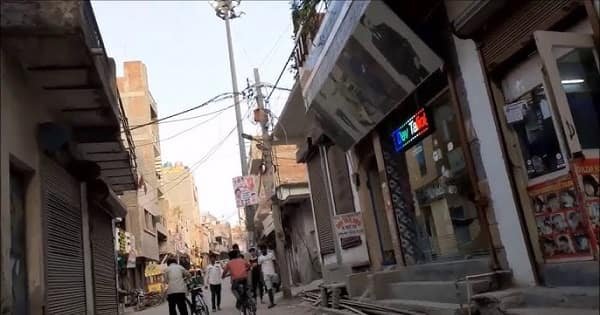
Tiranga Chowk Sangam Vihar Quick Details
| Category | Details |
| Location | Tiranga Chowk, Block G-2, Sangam Vihar, South Delhi – 110080 |
| Also Known As | Tiranga Chowk G-2; National Flag Chowk Sangam Vihar |
| Nearest City | New Delhi (~12 km), Faridabad (~14 km) |
| Highway | Connected via Mehrauli–Badarpur Road (MB Road) and Mathura Road (NH-19) |
| Key Roads | MB Road (Mehrauli–Badarpur Road), Mathura Road (NH-19), Sangam Vihar Main Road, Devli Road |
| Nearest Railway Stn | Hazrat Nizamuddin Railway Station (~10 km) |
| Nearest Metro | Govind Puri Metro Station – Violet Line (~7 km) / Saket Metro Station – Yellow Line (~5 km) |
| Nearest Airport | Indira Gandhi International Airport (~18 km) |
| Bus Connectivity | DTC buses, cluster buses, autos, e-rickshaws, app-based cabs |
| Iconic Landmark | Indian Tricolour (Tiranga) Installation, Peepal Chowk Mandir, Sangam Vihar Markets |
| Importance | Patriotic, community, commercial & residential hub |
| Nearby Areas | Block G-2, Sangam Vihar, Deoli, Devli, Khanpur, Sainik Farms, Saket |
| Pin Code | 110080 |
| Admin Body | South Delhi Municipal Corporation (South MCD) |
| Redevelopment Status | Delhi government regularization and civic upgrades (ongoing) |
1. Location & Identity of Tiranga Chowk
Tiranga Chowk is located in Block G-2 of Sangam Vihar — a South Delhi locality that holds the remarkable distinction of being one of the largest residential colonies in Asia by population. Sangam Vihar is a densely built grid of lettered blocks — A through M and beyond — developed organically over decades by residents who built their homes here and created, block by block, one of the most self-sufficient and community-rich neighborhoods in all of Delhi. The locality is bordered by some of South Delhi’s most prestigious addresses — Sainik Farms, Panchsheel, Saket, and Pushp Vihar — yet maintains its own distinct character, culture, and community identity.
Tiranga Chowk’s defining feature — the prominent display of the Indian Tricolour national flag — makes it instantly recognizable and emotionally significant for residents. The flag installation transforms an ordinary road junction into a daily reminder of national identity, patriotism, and the shared values that bind this diverse community together. On Independence Day, Republic Day, and other national occasions, the chowk becomes a focal point of community celebration, with residents gathering around the Tiranga in expressions of collective pride.
The identity of Tiranga Chowk is shaped by:
- The prominent Indian Tricolour installation that gives the chowk its name and patriotic identity
- Its location within Block G-2 of Sangam Vihar — one of Asia’s most populous residential localities
- Its role as a daily commercial and community gathering point for tens of thousands of nearby residents
It is often described as:
👉 Sangam Vihar’s flag-bearing heart — where national pride and community life meet daily
👉 A patriotic landmark within one of Delhi’s largest and most vibrant working-class communities
The area is surrounded by:
- Dense residential blocks of Sangam Vihar with tightly built homes and active street life
- Local markets, schools, temples, mosques, and community spaces
- Daily-use commercial establishments catering to the colony’s enormous population
Administered by: South Delhi Municipal Corporation (South MCD), responsible for civic maintenance, road management, and urban development across the Sangam Vihar zone.
2. Connectivity & Transport Infrastructure
Tiranga Chowk and Sangam Vihar enjoy good road and public transport connectivity, connecting the locality to South Delhi and other parts of the capital via key arterial roads and bus networks.
1. Road Connectivity
Mehrauli–Badarpur Road (MB Road):
One of South Delhi’s most important arterial roads, MB Road connects Sangam Vihar to Saket, Mehrauli, Badarpur, and Faridabad. It is the primary road corridor linking the locality to the broader South Delhi road network and is heavily used by Sangam Vihar residents for daily commuting to work, markets, and educational institutions across the city.
Mathura Road (NH-19):
Accessible within a short distance from the locality, Mathura Road is one of Delhi’s most important national highway corridors, connecting the capital to Faridabad, Mathura, Agra, and beyond. Its accessibility from Sangam Vihar provides residents with an important intercity road link.
Devli Road and Sangam Vihar Main Road:
These key internal roads connect Tiranga Chowk and the broader Sangam Vihar colony to the Devli, Khanpur, and Deoli areas, facilitating internal movement within the densely built colony grid and to the surrounding South Delhi neighborhoods.
The Delhi government and South MCD have undertaken road improvement and drainage upgrades within Sangam Vihar’s block network as part of ongoing civic improvement programs for regularized colonies.
2. Metro & Rail Connectivity
Saket Metro Station — Delhi Metro Yellow Line:
Approximately 5 km from Tiranga Chowk, Saket Station on the Delhi Metro Yellow Line provides connectivity to Central Delhi, Connaught Place, New Delhi Railway Station, and Gurugram. Auto-rickshaws and e-rickshaws provide last-mile connectivity between Sangam Vihar and the metro station.
Govind Puri Metro Station — Delhi Metro Violet Line:
Approximately 7 km from the chowk, Govind Puri Station on the Violet Line connects to Kashmere Gate, New Delhi Railway Station, and onward to Faridabad. The Violet Line provides an important metro option for Sangam Vihar residents traveling north or toward the NCR.
Hazrat Nizamuddin Railway Station:
Located approximately 10 km from Tiranga Chowk, Hazrat Nizamuddin is one of Delhi’s most important railway terminals, providing connectivity to Agra, Mumbai, Chennai, Bengaluru, and major cities across India.
3. Public Transport & Movement
- DTC and cluster buses run multiple routes through Sangam Vihar connecting it to Saket, MB Road, Badarpur, and other South Delhi zones
- Auto-rickshaws are the dominant short-distance transport within the colony’s dense block network
- E-rickshaws serve last-mile connectivity between the main roads and the internal colony lanes
- App-based cabs (Ola, Uber, Rapido) are increasingly used for longer city-wide trips
The combination of MB Road bus connectivity and proximity to Yellow and Violet Line metro stations provides Sangam Vihar’s residents with practical daily transport options to reach workplaces across the capital.
3. Historical Background & Cultural Significance
Tiranga Chowk and Sangam Vihar carry a remarkable history — the story of one of Delhi’s largest and most organically grown urban communities, built by the determination and enterprise of ordinary people.
Sangam Vihar’s Community History
Sangam Vihar developed from the 1960s and 1970s onward as migrants from across North India — primarily from Uttar Pradesh, Bihar, Rajasthan, and Haryana — began settling on the southern fringes of Delhi in search of affordable housing close to the capital’s employment centers. The colony grew organically without formal planning, with families building their own homes block by block, lane by lane, creating one of the most densely populated residential areas in the entire Asian continent. For decades the colony existed as an unauthorized settlement, but its sheer scale — housing over 10 lakh residents — made its regularization and civic development inevitable. The Delhi government’s recognition and regularization of Sangam Vihar brought new infrastructure, civic services, and legal recognition to the community, but the neighborhood’s identity remains rooted in the self-reliant, community-driven spirit of its founders and residents.
The Tiranga — Symbol of Unity
The naming and creation of Tiranga Chowk reflects a deep patriotic sentiment within Sangam Vihar’s diverse community. In a colony that is home to people from dozens of Indian states, religions, and cultural backgrounds, the Indian Tricolour serves as the universal symbol of shared national identity — the one flag that unites every resident regardless of their origin, language, or faith. The chowk’s prominent flag installation was created precisely to celebrate this unity, making it one of the most emotionally resonant civic installations in any of Delhi’s large residential colonies. On national occasions, the chowk becomes a spontaneous gathering point for Independence Day flag hoisting, Republic Day celebrations, and moments of collective national pride.
Iconic Landmarks Nearby
- Tiranga (Indian Tricolour) Installation — the patriotic centrepiece that defines the chowk’s identity
- Peepal Chowk Mandir — one of Sangam Vihar’s most well-known religious landmarks
- Sangam Vihar Main Market — the colony’s principal commercial hub serving daily retail needs
- Sunder Lal Memorial Hospital — one of the locality’s key healthcare establishments
- Select Citywalk Mall, Saket — a premium retail destination accessible from the locality
These landmarks reflect the rich mix of patriotic identity, community life, and civic infrastructure that characterizes Sangam Vihar.
Cultural Character
Tiranga Chowk represents:
- The extraordinary diversity of Sangam Vihar’s community — families from dozens of Indian states united under one Tricolour
- Festivals including Navratri, Diwali, Holi, Eid, Gurpurabs, and Chhath Puja celebrated with immense community participation
- The resilient, hardworking, and fiercely proud community spirit that has made Sangam Vihar one of Delhi’s most remarkable urban neighborhoods
4. Commercial & Market Activity
Tiranga Chowk and the surrounding Sangam Vihar colony support a dense and active local economy serving the daily needs of one of Delhi’s largest residential populations.
Key Commercial Zones
- Sangam Vihar Main Market — the colony’s largest commercial hub with retail shops and daily essentials
- Block-level local markets throughout the colony — serving daily neighborhood retail needs
- MB Road commercial corridor — retail showrooms, eateries, and service businesses along the arterial road
- Khanpur and Devli markets — neighboring commercial zones accessible from Tiranga Chowk
What You’ll Find
- Fresh vegetables, groceries, and daily household essentials at the local market
- Garments, footwear, and general merchandise at affordable prices
- Mobile repair, tailoring, and small service businesses catering to daily needs
- Street food stalls, tea shops, and affordable dhabas serving the working community
The area attracts:
👉 Local residents from Block G-2 and surrounding blocks for daily shopping and services
👉 Community members gathering at the chowk for daily social interaction
👉 Workers commuting through the MB Road corridor stopping for daily essentials
Street Food & Dining
The chowk and surrounding colony lanes offer hearty and diverse North Indian street food:
- Chole bhature, parathas, and aloo tikki at local dhabas and street stalls
- Chaat, golgappe, and bhel puri from popular evening vendors
- Sweets and snacks reflecting the UP, Bihar, and Rajasthani traditions of the colony’s migrant community
The food culture around Tiranga Chowk is affordable, diverse, and deeply rooted in the North Indian culinary heritage of the communities that built Sangam Vihar into the remarkable neighborhood it is today.
5. Real Estate & Commercial Importance (2026)
Tiranga Chowk and the broader Sangam Vihar real estate market represent one of South Delhi’s most affordable residential zones, increasingly attracting interest from budget homebuyers and investors.
Current Trends
- Growing demand for builder floors and independent houses in Sangam Vihar’s regularized blocks
- Increasing investor interest from buyers seeking affordable South Delhi residential addresses with improving infrastructure
- Average sale prices of approximately Rs. 19 lakhs to Rs. 1 crore reflecting the colony’s diverse property landscape
Investment Perspective
- Sangam Vihar offers some of the most affordable residential property in South Delhi
- Proximity to Saket (5 km) and its premium malls, hospitals, and offices adds significant location value
- Delhi government regularization and ongoing civic upgrades are steadily improving the area’s infrastructure and real estate appeal
It is ideal for:
👉 First-time homebuyers seeking affordable South Delhi residential addresses
👉 Investors targeting the growing regularized colony real estate market in South Delhi
👉 Small retail and service businesses catering to Sangam Vihar’s enormous residential catchment
6. Social Infrastructure & Daily Life
Tiranga Chowk and Sangam Vihar are supported by a growing network of civic and social infrastructure reflecting the Delhi government’s ongoing investment in the colony’s development.
1. Education
- Swarn Public School and several government and private schools serving Sangam Vihar’s large student population
- New Delhi Institute of Management and other higher education institutions accessible from the locality
- Jamia Hamdard and Jamia Millia Islamia Universities accessible from the broader South Delhi zone
2. Healthcare
- Sunder Lal Memorial Hospital — a key private healthcare facility serving Sangam Vihar residents
- Kunj Eye Hospital, Orthostar Hospital, and multiple clinics and dispensaries within the colony
- Government mohalla clinics providing affordable primary healthcare to residents
3. Shopping & Lifestyle
- Select Citywalk Mall and DLF Courtyard Mall in nearby Saket offering premium retail and entertainment
- Sangam Vihar’s own bustling local markets for daily essentials and affordable shopping
- PVR Select Citywalk Cinema accessible from the locality for entertainment
- Proximity to Sainik Farms, Mehrauli Archaeological Park, and Qutub Minar for recreation and heritage
7. Modern Redevelopment & Urban Changes
Sangam Vihar and Tiranga Chowk have benefited from the Delhi government’s ongoing regularization and civic improvement program for the colony, with investments in roads, drainage, healthcare, and civic services.
Key Improvements
- Delhi government regularization program providing legal status and civic upgrades to Sangam Vihar’s blocks
- Road resurfacing and drainage improvement in the colony’s block network
- Mohalla Clinic infrastructure expansion providing accessible healthcare at the neighborhood level
- Street lighting, CCTV, and civic amenity upgrades under South MCD programs
Impact
- Regularization has improved property security and civic service access for Sangam Vihar’s large population
- Better road and drainage infrastructure improving quality of life within the colony
- Improved civic environment enhancing the community’s daily experience and safety
This development has helped balance:
👉 Sangam Vihar’s organic, community-built character + Delhi government civic and regularization infrastructure
Conclusion
Tiranga Chowk in Sangam Vihar, South Delhi is far more than a road junction — it is a patriotic landmark, a community anchor, and a daily gathering point for one of the most remarkable human stories in Delhi’s urban history: the story of Sangam Vihar, a colony of over 10 lakh people built block by block, home by home, by the determination and enterprise of ordinary families who chose to make South Delhi their home.
In 2026, Tiranga Chowk stands proudly at the heart of Block G-2 — its national flag flying, its market lanes buzzing, its community gathering for celebrations, prayers, and the simple rhythms of daily life. With MB Road and Mathura Road providing city-wide connectivity, Saket’s metro and malls just 5 km away, Select Citywalk within reach, the colony’s own thriving markets meeting daily needs, and the Delhi government’s regularization and civic upgrades steadily improving the neighborhood, Tiranga Chowk remains the proud, flag-bearing heart of Sangam Vihar.
Whether you are a resident of Block G-2 going about your daily life under the shadow of the Tricolour, a visitor discovering the extraordinary scale and energy of one of Asia’s largest colonies, a community member gathering at the chowk on Independence Day, a homebuyer exploring South Delhi’s most affordable addresses, or simply someone experiencing the raw, real, and deeply patriotic spirit of working-class Delhi, Tiranga Chowk offers an experience that is genuinely, proudly, and unmistakably Indian.