 By Saurav
An encumbrance can quietly sit on a property in a form that the standard document buyers rely on to catch it — the Encumbrance Certificate — simply doesn’t show. Equitable mortgages, created by depositing original title documents with a lender rather than registering a formal mortgage deed, are a genuinely common way Indian properties get pledged as loan collateral. Because the EC only reflects registered instruments at the Sub-Registrar’s office, a property can carry a real, legally valid mortgage through this route while showing up completely clean on the one document most buyers treat as their final safety check.
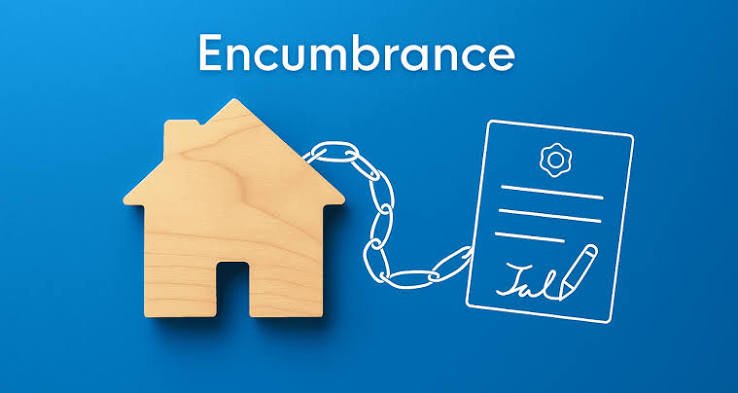
What an Encumbrance Actually Is, Precisely
Before looking at specific types, it’s worth being precise about what this term actually covers, since it’s broader than most buyers assume.
- An encumbrance is a third party’s legal right, interest, or claim on a property that doesn’t necessarily prevent the owner from transferring title, but can restrict its use or meaningfully reduce its value
- Encumbrances split into two useful categories: financial (liens, mortgages, charges) versus non-financial (easements, restrictive covenants), and separately, those affecting the property’s title versus those affecting its use or physical condition
- These claims don’t automatically mean a property can’t be purchased — many properties carry manageable, disclosed encumbrances that get resolved as part of a normal transaction
- What matters is identifying and understanding exactly what claims exist before completing any purchase, since an undisclosed or unresolved encumbrance can create genuine legal exposure for a buyer
Mortgage vs Lien: Voluntary vs Involuntary Claims
These two terms get used almost interchangeably in casual conversation, but they represent genuinely different legal mechanisms.
- A mortgage is a voluntary charge — the property owner deliberately offers the property as collateral to secure a loan, retaining possession while the lender holds a security interest
- A lien is a legal claim arising from unpaid obligations — property tax dues, a contractor’s unpaid bill, or a court judgment — and critically, a lien can be imposed on a property without the owner’s consent
- Tax liens often take precedence over other competing claims when multiple encumbrances exist on the same property, meaning they typically get resolved first if a property’s value can’t cover every outstanding claim
- Before a property can be sold with clear title, the owner generally needs to either clear the outstanding mortgage or lien, or secure the claimant’s explicit permission for the transfer to proceed
Easements: The Encumbrance That Runs With the Land Forever
This category behaves fundamentally differently from a financial claim, and it’s genuinely important to understand because it doesn’t disappear when ownership changes hands.
- An easement grants a specific right to a third party to use the property in a defined way — a classic example being a utility company’s right to access and maintain underground pipes or cables running beneath a property
- Easement rights don’t transfer title to the property, but they create legally enforceable rights that typically run with the land, automatically binding every future owner regardless of whether the new deed specifically mentions them
- Some easements are apparent and visible — an access path, a shared driveway — while others are non-apparent, like underground utility lines that leave no visible surface trace
- Not every easement diminishes value; some, like those providing essential utility access or a shared access road, can actually be necessary and beneficial rather than purely restrictive
Restrictive Covenants: When the Encumbrance Restricts Use, Not Title
A different category of encumbrance affects what an owner can actually do with a property, rather than creating any financial charge against it.
- Restrictive covenants, often called deed restrictions, impose specific rules on property use, typically enforced by housing societies, homeowners’ associations, or the original developer
- These restrictions might limit building heights, dictate aesthetic uniformity, or prohibit certain activities like running a business from a residential unit
- Unlike a mortgage or lien, a restrictive covenant doesn’t need to be “cleared” before sale — it simply continues applying to whoever owns the property next, meaning a buyer inherits the same restrictions the seller was bound by
- Understanding these restrictions before purchase matters particularly for buyers planning any specific use — a home office, a renovation, or a rental arrangement — that might conflict with rules the property has carried since its original development
What the Encumbrance Certificate Actually Shows — and Its Blind Spot
This is the document nearly every property transaction in India relies on, and understanding its actual scope — including what it structurally cannot capture — matters enormously.
- Under Section 57 of the Registration Act, 1908, the registers and indexes maintained by the Sub-Registrar are open to public inspection, and an EC is simply an extract of registered entries for a specific property over a specified time period
- The EC lists registered transactions — mortgages, registered leases, court-ordered attachments — giving a chronological history of everything formally recorded against that property
- Its critical blind spot: an equitable mortgage, created by depositing original title documents with a lender rather than executing a formal registered mortgage deed, doesn’t require registration and therefore won’t appear on a standard EC search at all
- Checking CERSAI (Central Registry of Securitisation Asset Reconstruction and Security Interest) records separately is essential specifically to catch this category of undisclosed charge, since it captures security interests that an EC search alone will miss
- A practical secondary check involves asking the seller to produce every original title document — if they can’t, those documents may currently be sitting with a bank as collateral for an equitable mortgage the EC never revealed
How to Safely Buy a Property That Has a Mortgage on It
A disclosed, existing mortgage doesn’t need to be a dealbreaker, provided the resolution process is handled correctly rather than left to trust.
- The safe mechanism is a tripartite agreement between the buyer, the seller, and the bank holding the mortgage
- The bank provides a written no-objection certificate agreeing to release the mortgage once the sale completes
- The buyer pays the outstanding loan amount directly to the bank, not to the seller, removing the risk that funds intended to clear the loan get diverted elsewhere
- The bank issues the formal release deed at the time of sale registration itself, ensuring the charge is legally lifted at the same moment ownership transfers
- Never rely on a seller’s verbal promise to “clear the loan after receiving your payment” — without the direct-to-bank tripartite structure, there’s no actual guarantee the loan gets cleared, and you could end up owning a property still legally encumbered by someone else’s unpaid debt
Why Even an Innocent Buyer Can Lose Ownership
This is the genuinely serious consequence that makes encumbrance verification worth taking seriously rather than treating as a routine formality.
- A buyer who pays the full agreed price in good faith can still lose ownership if a prior, valid encumbrance — particularly an undisclosed equitable mortgage — legally takes priority over their purchase
- This risk exists precisely because equitable mortgages don’t require registration, meaning a buyer relying purely on a clean EC can genuinely be caught off guard by a legitimate prior claim that simply wasn’t discoverable through the standard search
- Financial institutions understand this risk well, which is exactly why lenders carefully verify a property’s encumbrance status, including CERSAI records, before approving financing against it — buyers evaluating a purchase without financing shouldn’t apply any less scrutiny than a bank would
- Combining a fresh EC, a direct CERSAI search, and confirmation that the seller can produce every original title document together gives meaningfully more protection than relying on the EC alone
This is general educational information about how encumbrances affect property ownership in India, not legal advice. Specific verification requirements and resolution processes can vary, and consulting a property lawyer before any significant purchase, particularly one involving a disclosed or suspected encumbrance, is strongly advisable.
FAQs
Q1. If a property’s Encumbrance Certificate comes back clean, does that guarantee it’s free of any mortgage?
No. Equitable mortgages, created by depositing original title documents with a lender rather than registering a formal deed, don’t appear on a standard EC — checking CERSAI records separately is necessary to catch this specific type of undisclosed charge.
Q2. What’s the difference between a mortgage and a lien on a property?
A mortgage is a voluntary charge the owner creates to secure a loan, while a lien is a claim arising from unpaid obligations like taxes or court judgments that can be imposed on a property without the owner’s consent.
Q3. Do I inherit easements and restrictions when I buy a property, even if they’re not mentioned in my new deed?
Yes, generally. Easements typically run with the land and automatically bind every future owner, while restrictive covenants continue applying to whoever owns the property next, regardless of whether the new deed explicitly restates them.
Q4. What’s the safest way to buy a property that still has an existing mortgage on it?
Use a tripartite agreement between yourself, the seller, and the bank — pay the outstanding loan directly to the bank rather than the seller, with the bank issuing a formal release deed at the time of sale registration.