 By Saurav
The food truck concept has captured the imagination of India’s aspiring food entrepreneurs — offering a romanticised vision of culinary entrepreneurship with lower capital requirements than a traditional restaurant, the freedom of mobility, and the exciting energy of street food service elevated to a branded, professional format. India’s food truck movement has grown significantly over the past five years — moving from a niche novelty seen only at select Mumbai and Bengaluru events to an established food service format operating at corporate campuses, food parks, festivals, residential communities, and highway corridors across major Indian cities. Whether a food truck business is profitable in India in 2026 requires separating the appealing entrepreneurial narrative from the operational reality — a reality that contains genuine opportunities alongside serious structural challenges that determine whether each individual food truck thrives or struggles.
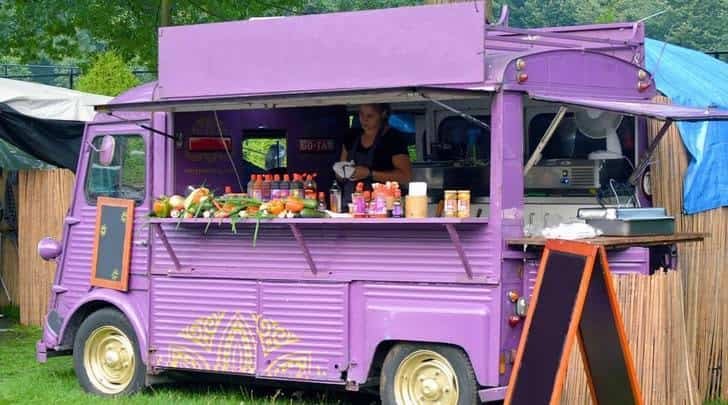
India’s Food Truck Market Context
India’s food truck ecosystem has developed along somewhat different lines than the Western food truck culture it initially emulated. Fixed location operation — parking at the same corporate campus, food truck park, or highway location daily rather than moving between multiple locations — has proven significantly more viable in the Indian context than the roaming model, because consistent location presence builds customer habit and eliminates the daily uncertainty of finding productive spots. Food truck parks aggregating multiple trucks in shared locations have emerged in Bengaluru, Mumbai, Hyderabad, and Delhi as anchor destinations that generate foot traffic benefiting all participants simultaneously.
Food Truck Business Key Financial Parameters
| Parameter | Basic Food Truck | Mid-range Branded Truck | Premium Concept Truck | Corporate Campus Operation |
| Vehicle and conversion cost | ₹5 lakh–12 lakh | ₹12 lakh–25 lakh | ₹25 lakh–60 lakh | ₹8 lakh–20 lakh |
| Equipment and fitting cost | ₹2 lakh–5 lakh | ₹4 lakh–10 lakh | ₹8 lakh–20 lakh | ₹3 lakh–8 lakh |
| Total startup capital | ₹7 lakh–17 lakh | ₹16 lakh–35 lakh | ₹33 lakh–80 lakh | ₹11 lakh–28 lakh |
| Average ticket size | ₹80–180 | ₹150–350 | ₹250–600 | ₹80–200 |
| Daily customer target — break-even | 80–120 | 60–100 | 40–80 | 100–200 |
| Monthly revenue — good location | ₹1.5 lakh–4 lakh | ₹2.5 lakh–8 lakh | ₹4 lakh–15 lakh | ₹2 lakh–6 lakh |
| Food cost percentage | 30–40% | 28–38% | 25–35% | 28–38% |
| LPG and utilities monthly | ₹8,000–20,000 | ₹12,000–30,000 | ₹15,000–40,000 | ₹10,000–25,000 |
| Location fee or parking charge | ₹5,000–30,000 monthly | ₹10,000–50,000 | ₹20,000–1 lakh | Contract-based |
| Net profit margin — established | 12–22% | 15–28% | 18–30% | 15–28% |
| FSSAI licence | Mandatory | Mandatory | Mandatory | Mandatory |
| Break-even period | 18–30 months | 18–36 months | 24–48 months | 12–24 months |
Profitability Drivers and Competitive Advantages
Lower Fixed Costs Than Traditional Restaurant: The food truck’s most compelling financial advantage over a conventional restaurant is its significantly lower fixed cost structure. Restaurant rentals in prime urban locations consume 15-25% of revenue — sometimes more — in fixed monthly obligations that continue regardless of customer count. A food truck’s location costs are typically 3-8% of revenue, dramatically improving the ratio of revenue that translates into profit versus disappearing into fixed occupancy costs. This fixed cost advantage means food trucks reach operating profitability at lower daily revenue thresholds than equivalent restaurants.
Corporate Campus Contracts: The most financially stable and predictable food truck operation in India is the corporate campus fixed location — a contracted arrangement where a food truck operates as the primary or supplementary canteen at a technology park, manufacturing facility, or office complex, serving a captive audience of employees at predictable daily meal times. Corporate contracts typically guarantee minimum daily revenue through employee meal subsidies, provide utility connections eliminating generator costs, and deliver consistently high daily transaction volumes that make profitability straightforward once pricing is calibrated correctly. Building relationships with corporate facility managers and HR departments who manage employee benefits programmes is the highest-value business development activity for food truck entrepreneurs.
Event and Festival Revenue Surge: Food truck participation in food festivals, music concerts, sporting events, wedding celebrations, and corporate events generates premium revenue at events where captive audiences with elevated spending intent create transaction volumes and ticket sizes that regular operations cannot match. A well-positioned food truck at a major food festival can generate ₹80,000-2,50,000 in two to three days — equivalent to several weeks of regular operation. Building relationships with event management companies and festival organisers creates access to the highest-revenue opportunities in the food truck calendar.
Menu Focus and Operational Efficiency: Food trucks that limit their menu to 6-10 well-executed items rather than attempting comprehensive menus achieve dramatically better operational efficiency — faster preparation times during peak demand, lower ingredient inventory and wastage, and more consistent quality than multi-menu operations can maintain in cramped mobile kitchen environments. Single-cuisine specialists — a truck dedicated exclusively to dosas, or to gourmet burgers, or to regional biryani styles — build the food memory and recommendation credibility that drives repeat visits and social media word-of-mouth more effectively than generalist menus.
Critical Challenges That Require Honest Acknowledgement
Municipal permit complexity is the food truck business’s most frustrating operational challenge in India — licensing requirements, parking regulations, and vendor zone restrictions vary significantly across cities and even across municipal wards within the same city. Many Indian cities lack clear, consistently enforced food truck operating frameworks — creating situations where operators invest in vehicles and equipment only to discover that their preferred location is off-limits for reasons that were not clearly communicated during planning. Operating in cities and zones with clear, supportive food truck policies dramatically reduces this regulatory uncertainty risk.
Weather dependency creates serious revenue seasonality — Indian summers with extreme heat and monsoon rains both reduce outdoor dining footfall significantly, creating 3-4 months annually of below-average revenue that cash flow planning must anticipate. Indoor food truck park locations that provide weather protection mitigate this risk substantially compared to fully outdoor operation.
Generator dependency for power in locations without electrical connections adds ₹8,000-20,000 monthly in fuel costs while creating noise and reliability challenges — making electrical connection availability a high-priority consideration in location selection.
Food Truck vs Alternative Street Food Business Formats
| Parameter | Food Truck | Fixed Kiosk | Cloud Kitchen | QSR Outlet |
| Capital requirement | Moderate — ₹7 lakh–80 lakh | Low — ₹1 lakh–8 lakh | Low — ₹3 lakh–15 lakh | High — ₹20 lakh–1 crore |
| Mobility advantage | Yes — location flexibility | No | No | No |
| Brand building potential | High — visual identity | Moderate | Moderate | High with franchise |
| Net profit margin | 12–30% | 18–35% | 15–28% | 10–20% |
| Weather dependency | High — outdoor operation | High | None | None |
| Corporate contract potential | Very high | Limited | Moderate | Limited |
| Event revenue potential | Very high | Low | None | Low |
| FSSAI requirement | Mandatory | Mandatory | Mandatory | Mandatory |
| Break-even period | 18–36 months | 8–18 months | 6–18 months | 24–48 months |
Food truck business is genuinely profitable in India for operators who secure corporate campus contracts or fixed food park locations for daily revenue predictability, develop event and festival participation for premium revenue surges, maintain focused menus that enable operational excellence within mobile kitchen constraints, and navigate municipal permit requirements in cities with supportive regulatory environments. The combination of lower fixed costs than restaurants and the brand-building appeal of the format creates a viable and rewarding entrepreneurial path for food entrepreneurs who approach operational planning with realistic rigour rather than purely emotional enthusiasm.